As a publisher, how do you reconcile artistic demands with market realities?

Accueil » Editeurs de design » Frédéric Winkler, founder of DCW Éditions
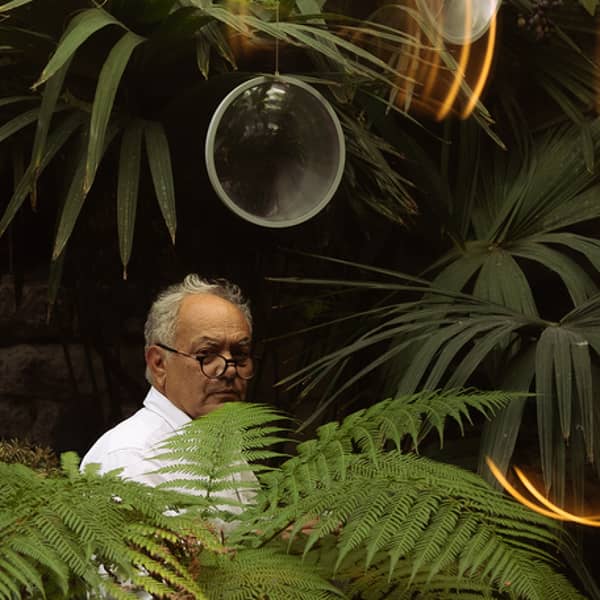
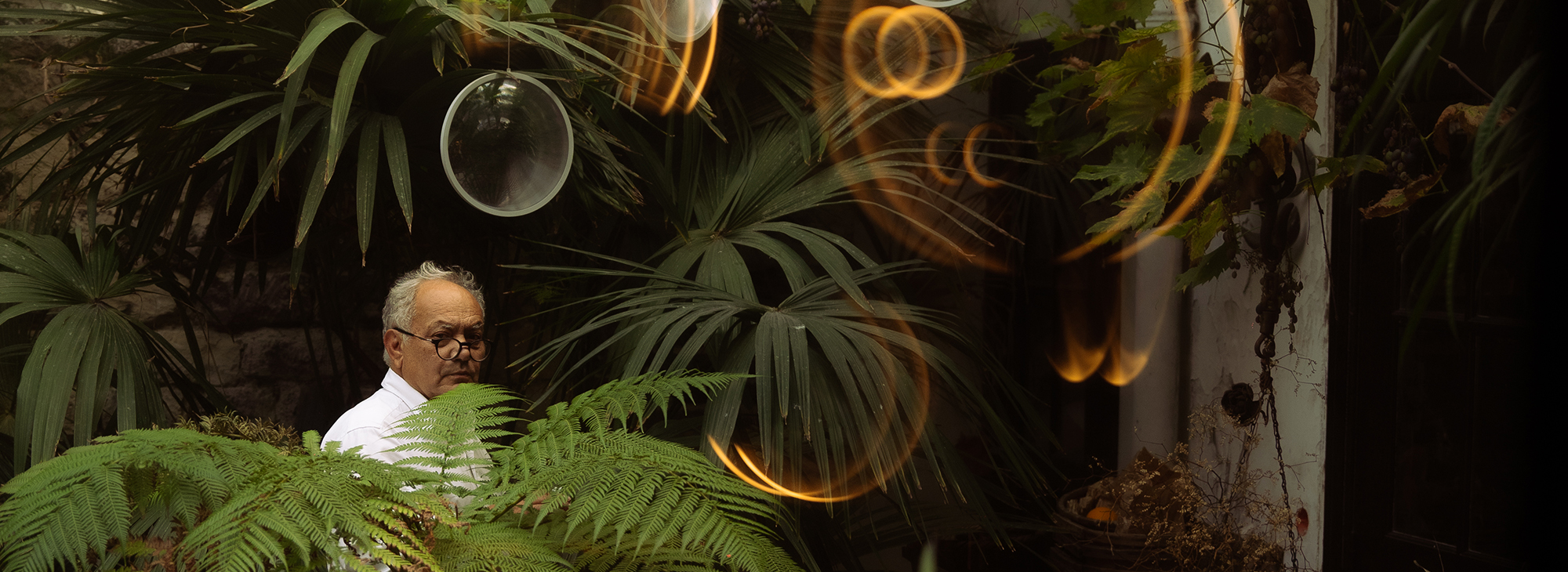
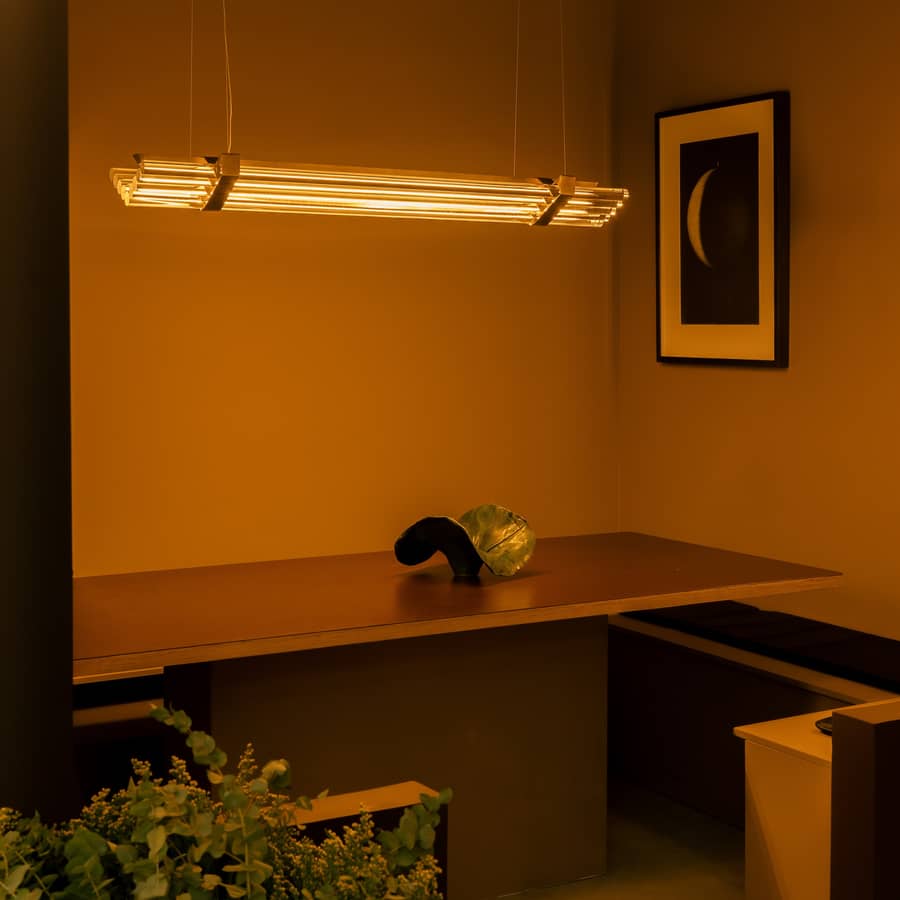
Founded in Paris in 2009, DCW éditions has established itself as a unique lighting house. More than a manufacturer, DCW éditions is a creator of just and timeless objects, designed to last, far from the diktats of the ephemeral. Each light becomes a daily companion, a witness between generations, but also a storyteller. The company values designers’ inventiveness and creative spark, transforming light into poetry, connection and conviviality.
exclusive interview
Behind the scenes of this luminous adventure, we met Frédéric Winkler, one of the 3 founders of DCW éditions and an original voice of French design. His vision as an editor goes beyond function to make lighting a sensitive object, conveying emotion and imagination. Alongside Ema Pradène, his ceramist lover, he cultivates a sincere approach, nourished by intimate stories and the spirit of childhood.
Anchored between Paris, the mountains and the shores of Morocco, Fred fashions a universe where art, design and nature interact seamlessly. Each creation is born of a story, each object finds its place in a quest for authenticity, and each collaboration is experienced as a human adventure. By sharing his daily life with us, he opens the doors to a world where detail is never insignificant, but the living expression of an attentive and poetic art of living.
How does the wonder of childhood inspire your lighting fixtures, which you call “toys for adults”?
To me, our lighting fixtures are like toys, like that old mechanical toy from the ’30s that I still treasure. Whether they’re yesterday’s or today’s, they retain their wonder thanks to the lovely intention that brought them into being in the first place. I love the idea of objects that vibrate without moving in time, carrying a secret link with childhood and the imaginary. And I hope that, like the toys of yesteryear, DCW éditions ‘ creations will stand the test of time, and still be with us a hundred years from now.
How did your childhood memories inspire these luminous “little worlds”?
The idea for “Polly Pocket for adults” came from a conversation with designer Charles Kalpakianwho was behind the design of theSoul wall lamps. He was evoking the atmosphere of the streets of Beirut during his childhood; I immediately thought of my daughters and the mini universes I was offering them. I’ve always been fascinated by these “little worlds” – from termite mounds to Kazuo Iwamura stories – where anything seems possible. For me, our homes are similar: worlds apart, magical, almost imaginary. In the end, I’m always trying to recapture my childhood, which, as luck would have it, was a wonderful one.
“For me, our luminaires are like toys, like this old mechanical toy from the 1930s. […] I’ve always been fascinated by these little worlds where anything seems possible.”
How did your passion for objects come about?
I often say that I’m a collector – but that’s a shortcut. It all started when I was a child, when my father would take me to flea markets and auctions in Lyon. I used to buy candlesticks, already captivated by the magic of candles. My mother always lit one before the evening song: a childhood ritual engraved in my memory. In the ’70s, I even had my own “luxury candle”: a Rigaud, with its black and white zebra cylinder and fir-colored green wax. Its Christmas scent still comes back to me sometimes. Then I started buying lamps… and I’ve never stopped.
I later understood why this obsession: beyond the memory of my mother, there was the pleasure of transforming a space. I loved decorating my bedroom, changing the atmosphere without upsetting anything. What could be simpler than a light fixture when the object is just right? The eye catches it and the light does everything: the tone, the mood, almost the fragrance of a room. Light is what we share – like the smell of toast or apple pie on a Sunday morning.
The Scandinavians understand: beautiful lamps, the right light, nothing else. I’m proud that they – and the Germans – love our creations for their high standards. And Italy? The land of lighting! It’s Italy that made me want to become a publisher. They’re excellent… but, today, I think we’re doing pretty well.
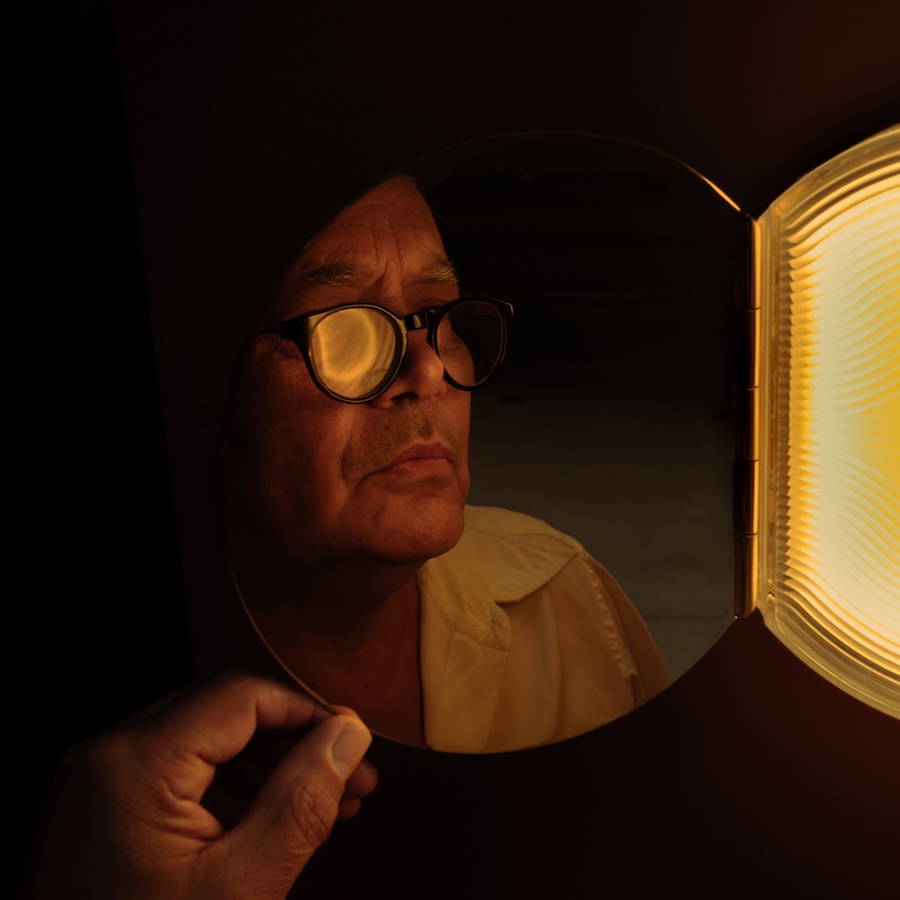
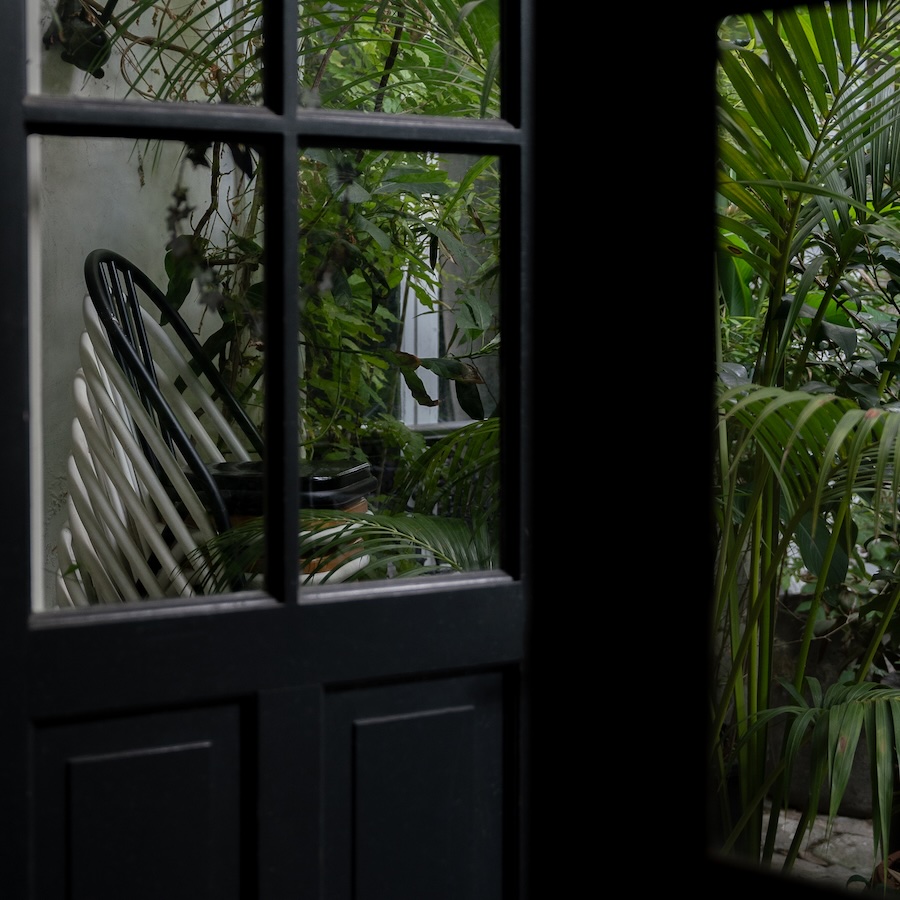
“What could be simpler than a light fixture when the object is just right? The eye latches onto it and the light does everything: the tone, the mood, almost the fragrance of a room.”
As a publisher, how do you reconcile artistic demands with market realities?
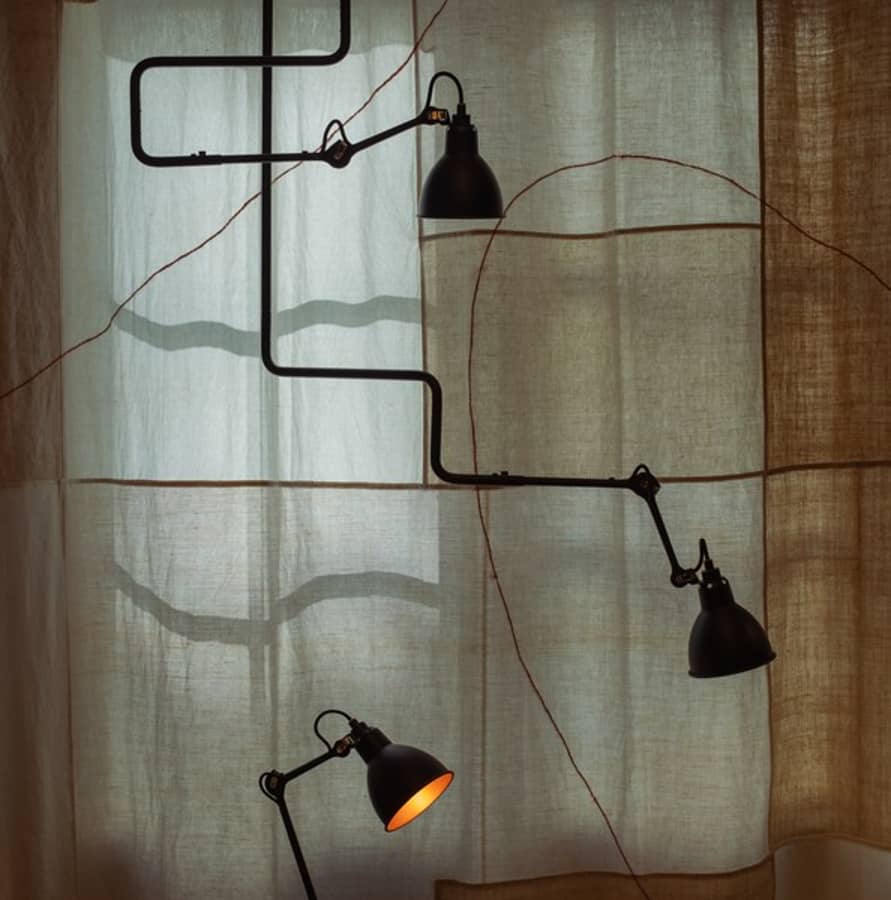
You can’t be a publisher without making money. We were lucky to start with the reissue of the Gras lamp. We did it jokingly, but we played with the seriousness of children. Without knowing it, it was the right time! Like a book publisher … Who knew Harry Potter would be a hit? The book spoke to a publisher who simply loved it, then calculated his risk. That’s what publishing is all about: you love it, you want to share it, then you assess the risk.
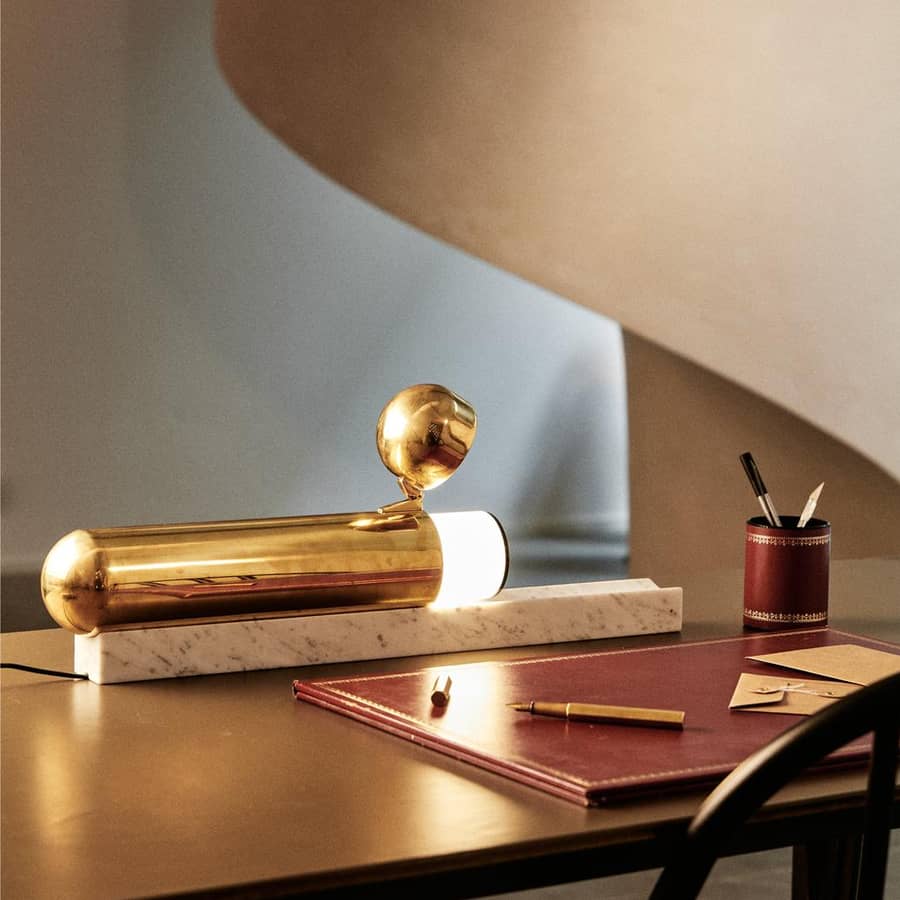
There have been times when I’ve come across something I loved, but couldn’t publish because it was too risky. We mustn’t forget that we also have a responsibility towards those who take the risk with us: I’m thinking of stores, websites… So we’re careful, and at that point, we can afford to make books of poetry. The ISP lamp is a bit like a collection of poems. Luckily, it was acclaimed from the outset. Well-known aesthetes such as architects, decorators and film directors bought it for themselves. All over the world, it met with this success. Mind you, I’m not talking about a success like the Harry Potter book, but rather like Francis Ponge’s collection Le parti pris des choses.
Can you tell us about this success story, which illustrates the balance between its design history and the way it welcomes customers?
Ilia Sergeevich Potemin had a strong conviction: “The further we advance, the less we’ll know how to use our hands. The day we stop using our hands, Man will regress below the ape.” The idea, therefore, was to create a lamp that forces manual interaction in order to retain the skill and engagement of the hands in an increasingly automated world. ForPSI, the hand becomes the switch and the dimmer. Dimitri Lefoulon, an engineer from the Ecole Centrale de Paris, has worked with Ilia to develop an interior system for a lighting fixture worthy of science fiction! I love the Musée des Arts et Métiers. Maybe one day, a future curator will ask to integrate the ISP lamp.
Many DCW editions are present in your home. Why do you ask?
Before publishing an object, we live with its prototype for some time. It’s a testing stage, essential to the process: testing the accuracy of the object and its light, its temperature, its power… and checking that the piece stands up to everyday use. I’ve sometimes given up on certain models, simply because they didn’t stand up to the test, or because I didn’t feel they were fully developed. How can I explain this? That’s what remains inexplicable.
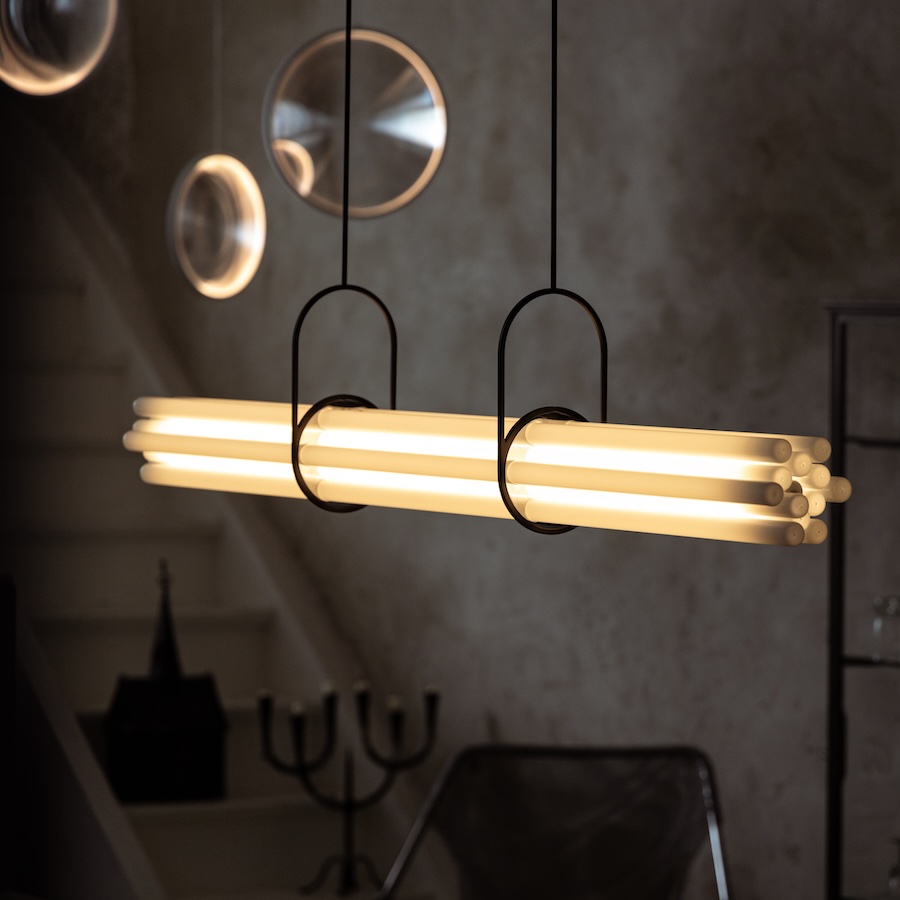
“Publishing is: loving, wanting to share, then assessing the risk, just like a book publisher.”
How do you strike a balance between surprise and timelessness?
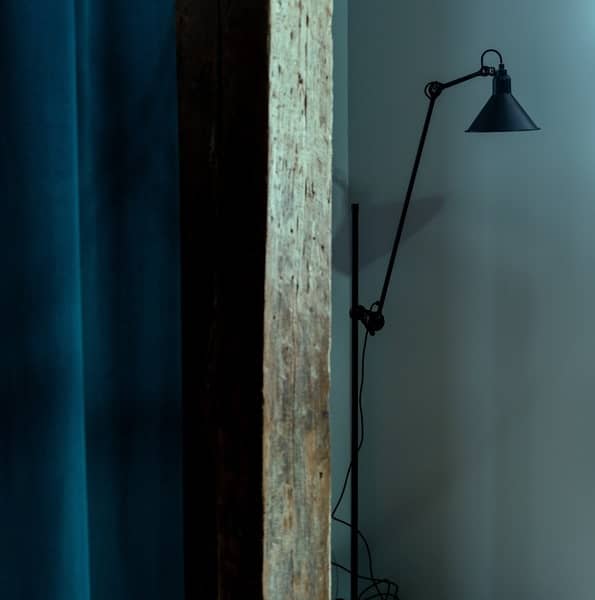
Our creations at DCW éditions stand out for their originality, but without ever seeking to provoke. I like the idea of being a wave generator rather than a follower. What we do is always twisted, but remains classic: it’s surprising, without being shocking. Unlike some designers I admire, we don’t seek to shake things up, but rather to offer a different perspective, a subtle poetry. Some of our pieces reflect this quest. The Niwaki lamp by Brichet and Zieglerinspired by Japanese trees carved into clouds, seems to me a remarkable object, destined to become a future museum piece despite its discreet success. The Knokke lamp by Éric Dormael transforms a forest of street lamps into a poetic object, while the portable lamp by Jean-Louis Fréchin is inspired by the idea of capturing a ray of sunlight. The birth of collections is never calculated: it’s born of encounters and moments. Like the dream I had of going to the Moon with my friend Bernard Paillard, which became a series of fifteen images now on show at the DCW éditions. Or Davis Sakne, who took the photos for this report and whose singular eye I admire, capable of capturing what others fail to perceive: the poetry of colors, reflections and blurs. He’s a bit like the son of Saul Leiter, the great American photographer of the mid-20th century, who captures the poetry of everyday life in color – between apparitions, reflections and suspended moments.
How did you meet Ema, your lover?
A friend had given her an invitation to Maison & Objets, which she didn’t know. Ema was just discovering DCW éditions ‘ lighting fixtures and, with a straight face, accused me of being a copycat of the Gras lampslamps, finding it an absolute disgrace. I explained to her that they were in fact re-editions, published under specific licenses. Elegant and unusual! She looked like something out of a cartoon: a large sheepskin thrown over her shoulders, a typical Dries Van Noten green dress – a green worthy of a children’s story – and huge wooden clogs covered in sheepskin. After this initial colorful exchange, we met again. Ema invited me into her atelier, where I bought a first piece, then a second, then a third… until our paths mingled more closely.
Ema is a well-known ceramist. Aesthetically, she could be compared to Claude Champy, but with a more feminine approach. In fact, we share a common admiration for her work and live with several of her pieces. We love her journeys between spaceships and marine plants. Her powerful, chance-inducing work is full of life.
“Our creations at DCW éditions stand out for their originality. The desire to offer a different perspective. The collections are born of encounters and creative moments.”
At the heart of their home, Ema’s studio is a natural part of the universe they shape together. A companion both in life and in creation, she embodies an attentive presence and complementary energy. Her journey is a remarkable odyssey: five and a half years around the world with her young son, discovering the ancestral skills of ceramics. After an initial immersion in Japan – where she had lived, learned the language and discovered the art – she continued her apprenticeship in Europe, Africa and Asia. Her journey ended where it all began, rich in accumulated knowledge and able to refine a now-mastered gesture.
You undertook a five-year world tour. How did this experience, and the discovery of ceramics in Japan, shape your career?
It was in Japan that I was first introduced to ceramics, discovering its deep connection with the art of cooking. The tableware, in particular, moved me by the way it dialogues with food. In France today, ceramics are cold, too mineral, a soulless medium. In Japan, it’s the opposite: it’s carnal, incarnate… an essential link that recalls nature in its state of being. My world tour then took the form of a quest: to encounter strong and varied cultures, to accumulate knowledge, to gradually shape my own artistic language.
During this voyage of initiation, which countries have particularly nurtured your vision of ceramics, and which cultures have left an indelible imprint on your work?
Every country I’ve crossed has had its own importance. From Persia and Egypt to the intense blues of Uzbekistan, each has nourished my gaze. Iran was a major step: I love pre-Islamic Iranian art, it’s extraordinary. India and Morocco brought me the richness of their Islamic traditions, while Spain and Italy reconnected me to my “ancestral culture” through old potters’ villages. Finally, Japan rounded off this five-year journey like a return to my roots, where I was able to deepen and refine my gesture.
Japan seems to be a fundamental source of inspiration for you, why is that?
To me, crockery is inseparable from what’s inside it. It’s directly linked to what you eat. Each dish finds its own setting: fish in ceramics reminiscent of the sea, rice in bowls evoking fields and rivers, tofu in designs inspired by the mountains. This correspondence creates a veritable ceremonial, both simple and deeply pleasurable. I interpret it as a typically Japanese and animist way of giving thanks to a nature that is both generous and sometimes violent. “A gesture of gratitude, seemingly discreet but profoundly essential.
Has this approach led you to collaborate with Michelin-starred chefs? How do these co-creations work?
I regularly collaborate with chefs, in a spirit of co-creation where our universes feed off each other. With Hélène Darroze, the guiding principle was roundness and softness, echoing her restaurant. In Marseille, creations for Alexandre Mazzia took on the colors of his universe: blues of the sea, yellows of the sand, touches of coral. My role is always to adapt to their vision: “It’s their restaurant, their world. However, my signature green, which I had initially chosen for its prosaic simplicity linked to nature, often comes back in these collaborations and arouses a lot of enthusiasm.
Your initial training is unusual in the art world. Tell us about it!
Before devoting myself to art, I took a completely different path: I studied medicine. I soon realized that I could no longer bear the suffering of patients. On the advice of a professor who saw an artist in me, I pursued my thesis while studying drawing as an independent candidate at Penninghen. This period was essential, as I dreamed of becoming a painter; ceramics was not yet on my path.
Does your creative process in ceramics leave room for the unexpected? And what role does nature play in it?
In ceramics, I never start with a preparatory drawing. Drawing and painting belong to painting, but for ceramics, my process is quite different: more organic, more experimental. I let myself go by chance, then take over again if the result inspires me. Nature, on the other hand, is a constant, almost a vital necessity. Even in Paris, I need to be surrounded by greenery. This is no doubt linked to my childhood in the countryside, in a very Japanese-style house designed to blend into the landscape. This intimate relationship with the environment has always nourished my work.
“It was in Japan that I had the revelation of ceramics, discovering its deep connection with the art of cooking.”
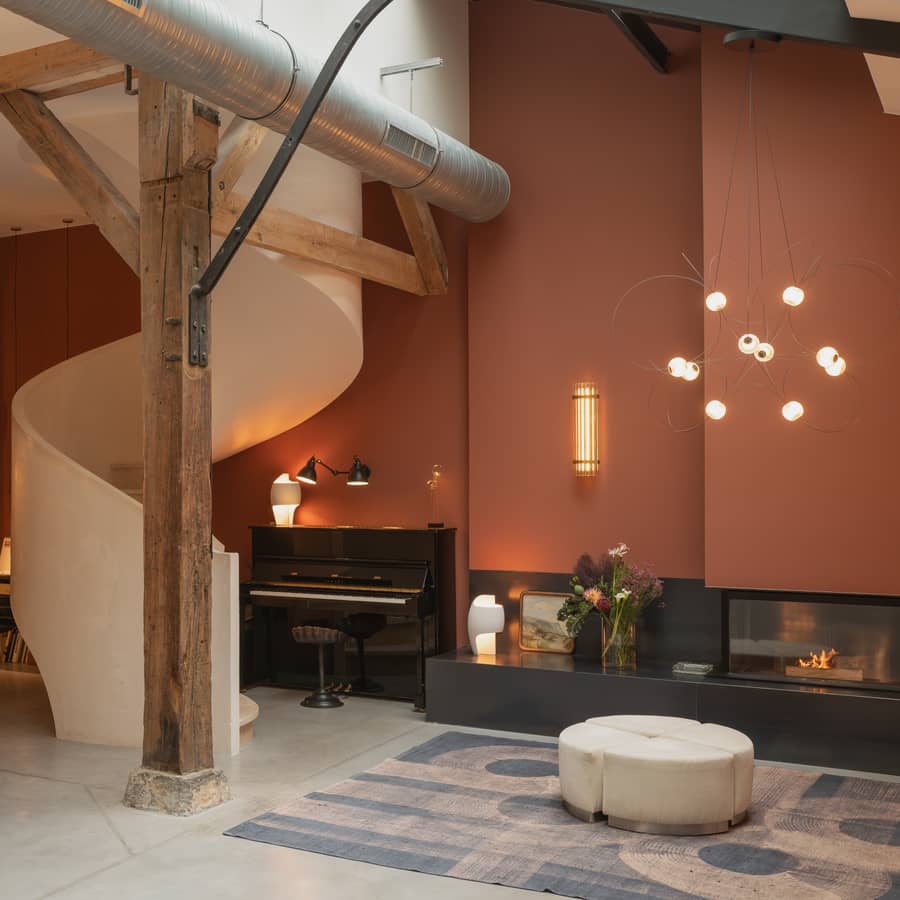
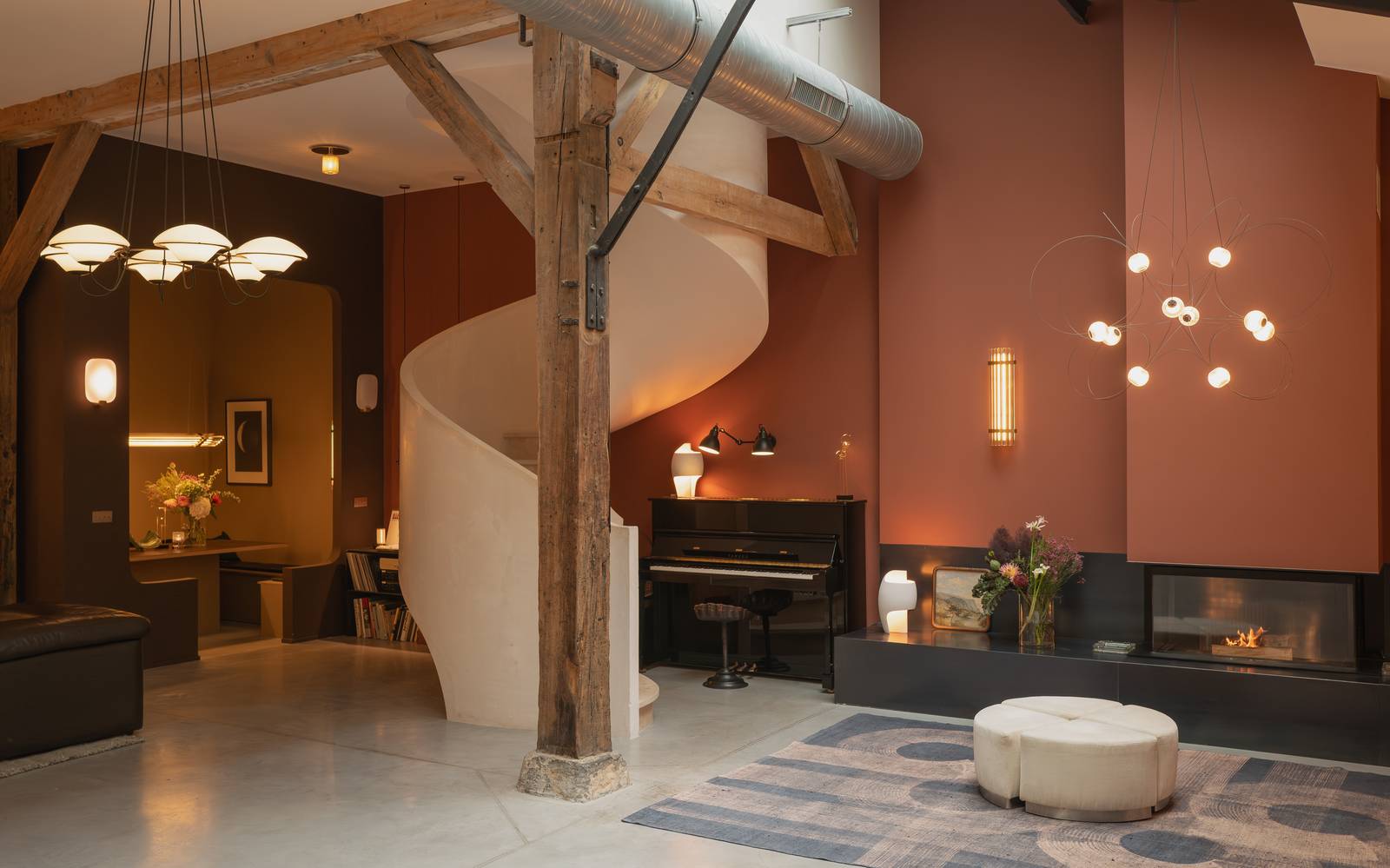
What’s the link between your home and your showroom?
Our home is a journey back in time, with the hope of breathing in tomorrow! A house that smells like friends. I loved Claude Sautet’s films so much…
The showroom houses DCW éditions, its little sister Dix heures Dix and Modelec switches. He and n ur home have one thing in common: they’re meeting places. If there’s a fireplace in the showroom, it’s because it’s good to have a flambé in the morning at coffee time, just as it’s good to roast chestnuts at 5pm. Work is life! And in life you have to do yourself good, so…
At the beginning of my career, I worked at Virgin. It was a way of life where everyone was very committed, where everyone had chosen to work in this sector. That’s never left me! Times have obviously changed. Younger people today are very strict about time spent. They fragment their lives into different activities: cooking rhymes with climbing wall, yoga and slackline classes… That’s good too! The important thing is not to waste your life earning it! Not from me, but from Alfred Capus.
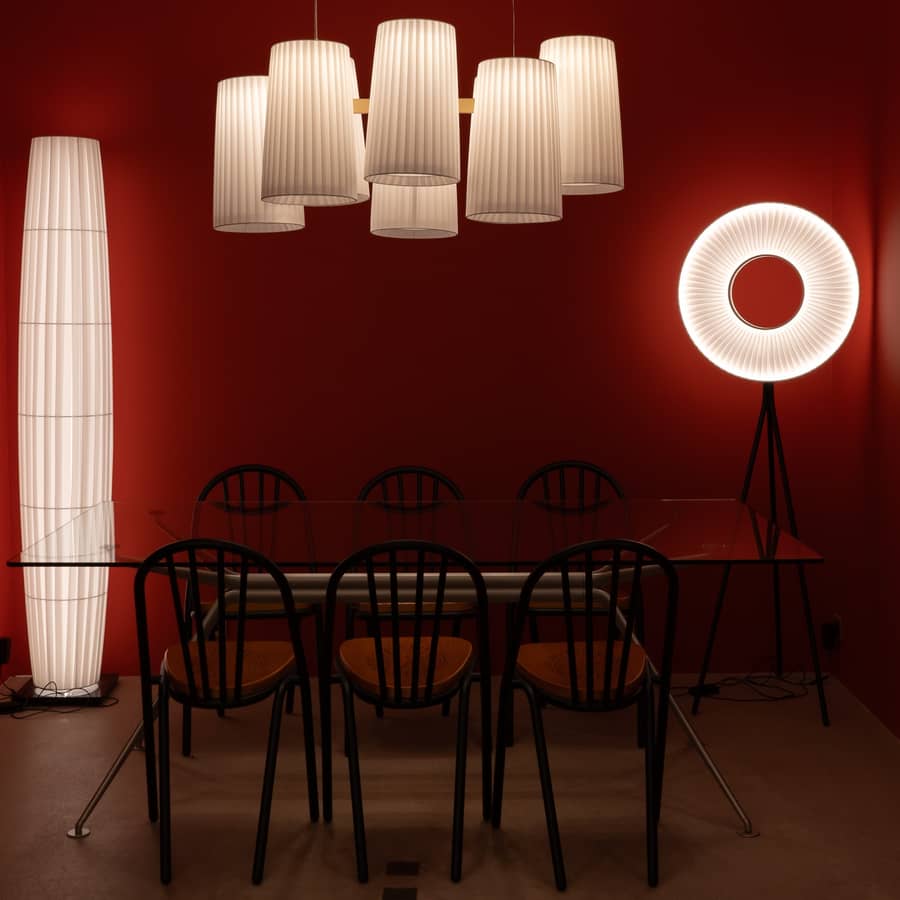
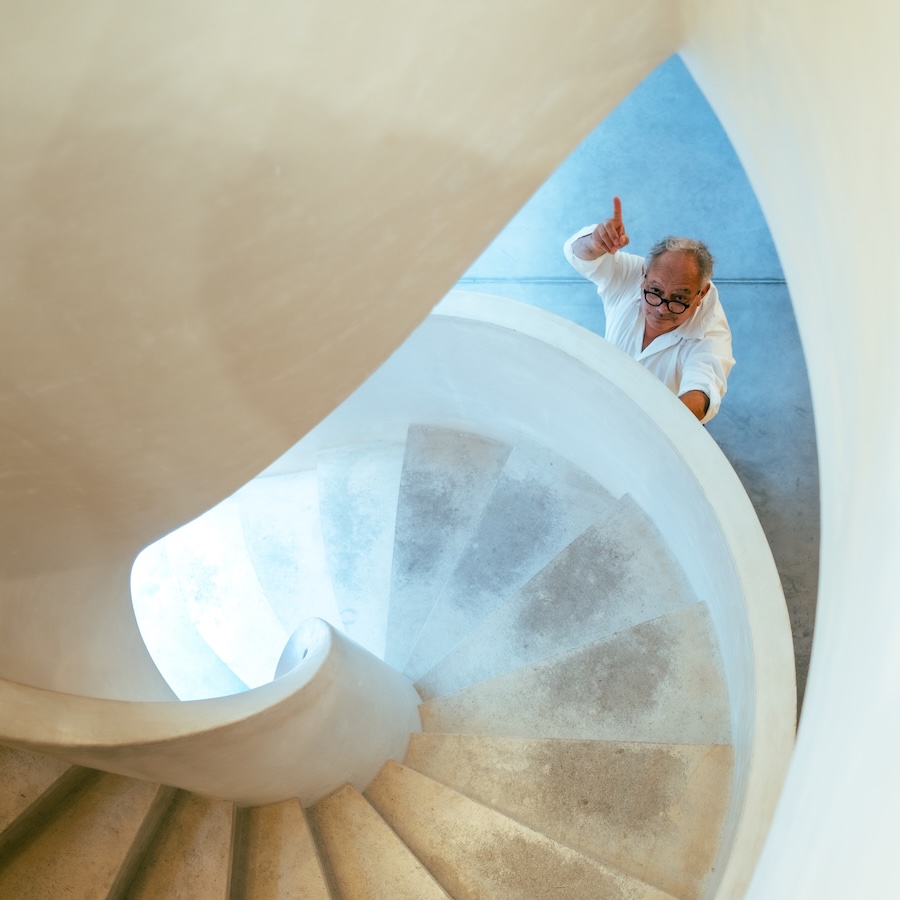
Why name the showroom Bar Electrique?
The first floor is like a house: we live with our lights, and so do our visitors. Open to the public every day of the week, there’s a fireplace, a kitchen island and a games room, complete with backgammon! For professionals, it’s accessible 24/7 with an access card, and the larder is always ready… Tomme de Savoie and everything to go with it! This allows you to feel the object and its light. When an architect puts a lamp in a project, when you buy a lamp for yourself, you keep it for a long time! Maybe a lifetime when the object is good.You can’t go wrong when it’s for life! . And sometimes life turns around and we can evolve. If the lamp is good, it will never end up on a sidewalk, abandoned because unloved. Objects are witnesses…
At the Bar Electrique, you live something, you experience something for a while…
The staircase in your showroom is a spectacular architectural feature. What is its history and the inspiration behind its design?
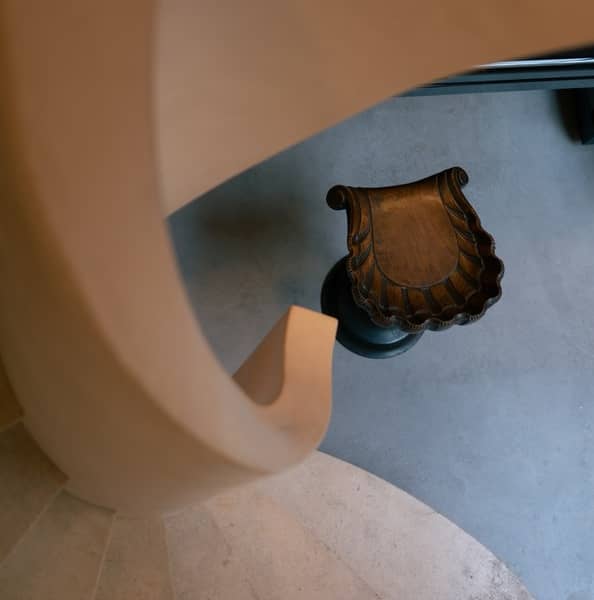
Architect Valérie Mazerat came up with the idea: “We need a strong staircase, an architectural landmark. She was right. On her recommendation, the excellent plasterer Sébastien Mauriac designed this Saracen vault, which has become the real signature of the place. Thanks to this gesture, the space has found its character and success.


Why do you think lighting fixtures define and shape an environment?
It’s a deep conviction. It’s the objects that give a place its soul, because they speak about us. A total look is boring. If you don’t talk about yourself, you can only talk about others. And if he only talks about others, does he even know who he is?
A home is an intimate nest, a place to “live”, to receive, to exchange and to grow together. Do we really need objects? Not really, but still. Of course, I don’t believe in and don’t subscribe to the idea of a state-of-the-art lamp that you have to have in order to be. But objects tell a story, speak to our history.
There’s a couple of restaurateurs above Nice in the mountains. A wonderful inn, it’s so good! Almost all the lighting fixtures are from DCW Editions. So not too ugly!
She asks me: Do you like it?
– I love it.
– But my painting with the wolfhound…it doesn’t look good with your lights.
– Where does your painting come from?
– It’s my grandmother’s. I feel like it brings me luck.
– Then your painting has its place!
The objects are loaded! From their creation to their journeys through time and space, they speak of us and converse with us.
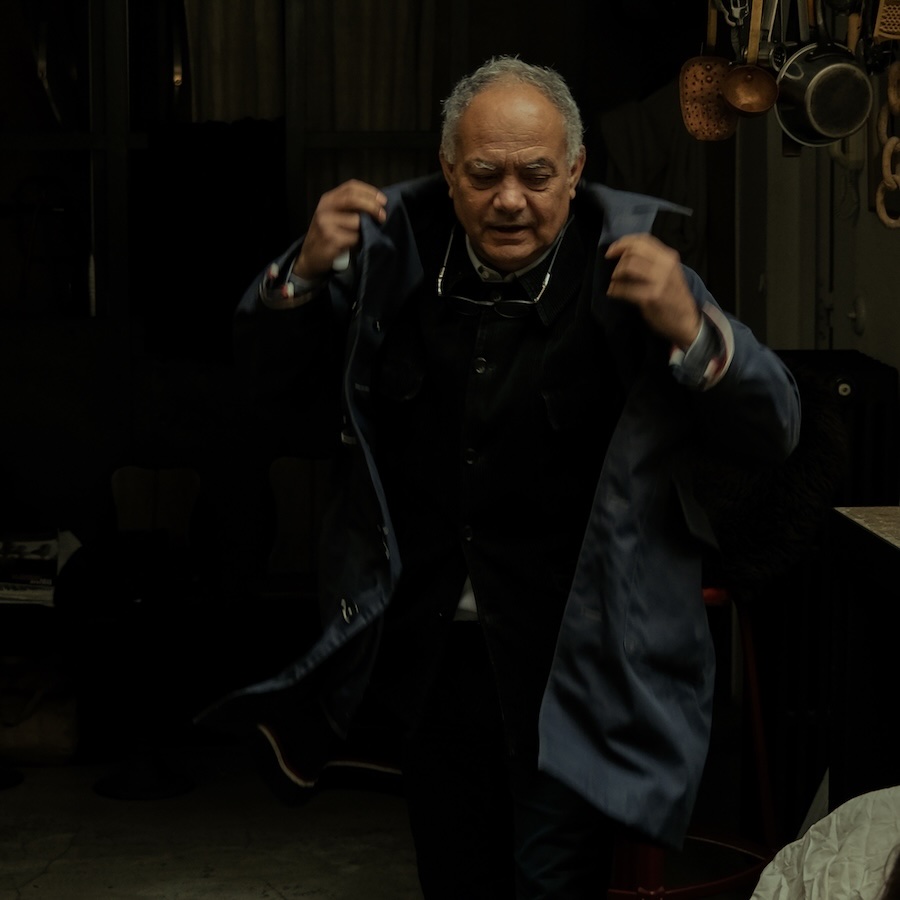
Who are the followers of DCW éditions? You often talk about architects and designers, but never mention them. Why?
It’s complicated to talk about other people. Just because a well-known or well-known person has bought a lamp, doesn’t mean it’s a good one. First of all, it has to be good for you! It’s true that people who touch with their eyes, such as architects, decorators, artists and the film world, often appreciate what we do. It’s great, the tribe is growing! In any case, beauty has never done any harm, I’m sure; it does good. Thanks to all the authors we work with. And a big thank you to Gaëlle Lauriot-Prévost and Dominique Perrault. They followed us when we weren’t yet a well-known publisher.
Photographers
©Davis Sakne
©Clément Gérard
Baptiste Le Quiniou